Hank Aaron Net Worth 2026 - The Hammer's Enduring Financial Legacy
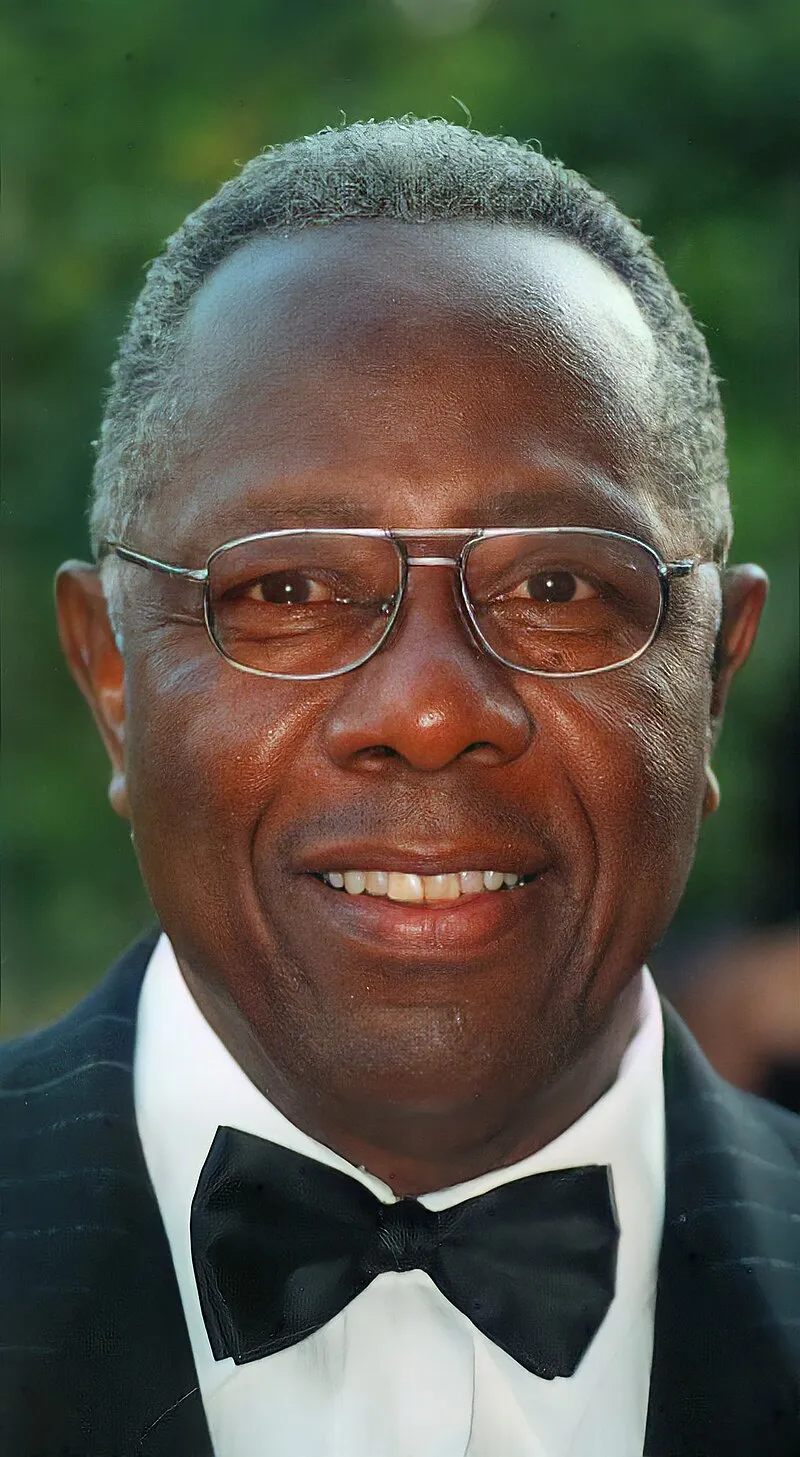
Photo of Hank Aaron, via Wikimedia Commons
Hank Aaron passed away on January 22, 2021, at the age of 86, but the financial empire he constructed over seven decades of public life continues to generate returns that few athletes of any era could rival. Adjusted for inflation, posthumous licensing agreements, and the sustained institutional investment his family and estate have maintained, Aaron's net worth at the time of his death is estimated to have exceeded $25 million, with the broader value of his name, estate, and associated enterprises placing his legacy's economic footprint considerably higher in 2026.
For a man who signed his first professional contract for $200 a month in 1952, that figure represents one of the most disciplined wealth-building arcs in baseball history.
From Mobile to Milwaukee: The Foundation Years
Henry Louis Aaron was born on February 5, 1934, in Mobile, Alabama, into a working-class family navigating the hardships of the Jim Crow South. His path to professional baseball ran through the Negro Leagues — he played for the Indianapolis Clowns in 1952 — before the Milwaukee Braves purchased his contract for $10,000. It was a transaction that would prove to be among the most lopsided bargains in sports history.
Aaron's MLB salary trajectory reflected the era's stark economic realities. His peak annual salary during his playing career is estimated at approximately $200,000 per season in the early 1970s — a figure that, while impressive for the time, stands in almost comical contrast to the nine-figure contracts his successors would command. Over 23 major league seasons, his total playing earnings are estimated at roughly $1.5 to $2 million in career salary, a number that modern stars earn in a single week.
Yet Aaron understood, earlier than most of his contemporaries, that the ballpark was only the beginning.
The 755 Effect: How Home Runs Became Currency
When Aaron surpassed Babe Ruth's all-time home run record on April 8, 1974, hitting his 715th career home run off Al Downing at Atlanta-Fulton County Stadium, he did so under the weight of an unconscionable volume of death threats and racist correspondence. The courage he demonstrated in that moment cemented his status not merely as a baseball player, but as a cultural institution — and cultural institutions command economic premiums that outlast athletic performance.
By the time Aaron retired in 1976 with 755 career home runs, his marketability had transcended the sport. Endorsement partners recognized that his name carried moral authority alongside athletic achievement. Coca-Cola, headquartered in Atlanta and deeply embedded in the city's civic identity, maintained one of Aaron's longest and most lucrative brand relationships. The partnership was not merely transactional; Aaron became a genuine ambassador for the company, participating in campaigns that reinforced his image as a dignified, principled public figure.
Additional endorsement relationships with automotive brands and consumer goods companies supplemented his income throughout the 1970s and 1980s, though Aaron was notably selective — a quality that preserved the premium attached to his endorsements rather than diluting it through overexposure.
Business Ownership and the Atlanta Connection
Perhaps Aaron's most financially astute decision was his commitment to building business infrastructure in Atlanta, the city where his greatest baseball achievements unfolded. He became a minority owner of the Atlanta Braves, a stake that provided both financial returns and the kind of institutional access that amplified every subsequent business endeavor.
His most significant entrepreneurial achievement was the establishment of a Arby's restaurant franchise network across the Southeast. At its peak, Aaron's franchise portfolio included more than a dozen locations, generating consistent cash flow that was largely independent of his baseball celebrity. It was a textbook application of franchise economics: a proven business model, scalable operations, and geographic concentration that allowed for efficient management oversight.
Aaron also held interests in automobile dealerships and various real estate assets across the Atlanta metropolitan area, building a diversified portfolio that reflected genuine financial sophistication rather than the passive celebrity investments that characterized many athlete wealth stories of his era.
Real Estate and Long-Term Asset Building
Aaron's real estate holdings were concentrated primarily in Georgia, where he maintained significant residential and commercial property interests. His primary residence in Atlanta was a substantial asset, and his broader property portfolio — accumulated over decades of disciplined reinvestment — contributed meaningfully to his overall net worth.
Unlike many athletes who liquidated assets during financial downturns or career transitions, Aaron demonstrated a consistent preference for asset retention. His estate planning reflected the same patience and long-term thinking that characterized his approach to hitting: systematic, disciplined, and oriented toward cumulative results rather than immediate gratification.
Post-Career Roles and Speaking Engagements
Following his playing career, Aaron served as a senior vice president and assistant to the president of the Atlanta Braves organization, a role that kept him central to the sport's institutional life while generating executive compensation. His presence in the Braves' front office was not ceremonial — he was an active voice on matters of player development and organizational culture.
His speaking circuit commanded fees commensurate with his historical stature. As a civil rights figure as much as a baseball legend, Aaron was sought after for corporate diversity initiatives, educational institutions, and civic organizations willing to pay premium rates for access to his perspective. Speaking fees in the range of $50,000 to $100,000 per engagement were consistent with his market position in the years before his health declined.
Hall of Fame induction in 1982 — in his first year of eligibility — further institutionalized his legacy and provided a durable platform for licensing and memorabilia revenue that has continued to generate income for his estate.
The Hammerin' Hank Legacy Fund and Humanitarian Capital
Aaron's philanthropic work, while not a direct source of personal wealth, performed an important function in the economics of legacy management. His charitable activities — focused heavily on youth baseball development and civil rights education — reinforced the moral authority that made his brand uniquely durable. The Hank Aaron Chasing the Dream Foundation, established in 1994, provided college scholarships and baseball opportunities to underprivileged youth, sustaining the narrative of Aaron as a figure whose significance extended well beyond athletic statistics.
In the economics of posthumous celebrity, moral authority is a depreciating asset only when it is compromised. Aaron's was never compromised, which is why his licensing value has remained stable and why his estate continues to command meaningful royalties from memorabilia, documentary licensing, and institutional partnerships.
The 2026 Legacy Valuation
In 2026, Hank Aaron's financial legacy is best understood not as a static net worth figure but as a living economic institution. His estate continues to receive royalties from the Baseball Hall of Fame's licensing operations, from memorabilia authentication programs, and from documentary and archival content that has found new audiences on streaming platforms. The enduring relevance of his civil rights narrative — particularly in the context of ongoing national conversations about race in America — ensures that Aaron's story will continue to attract institutional and commercial interest for generations.
For a man who began his professional life earning $200 a month, Hank Aaron's financial trajectory represents something more instructive than raw wealth accumulation. It represents the compound interest of integrity, discipline, and the willingness to build deliberately across a lifetime. The Hammer, it turns out, was just as precise in the boardroom as he was in the batter's box.