Lou Gehrig Net Worth 2026 - An Iron Horse Legacy That Time Cannot Retire
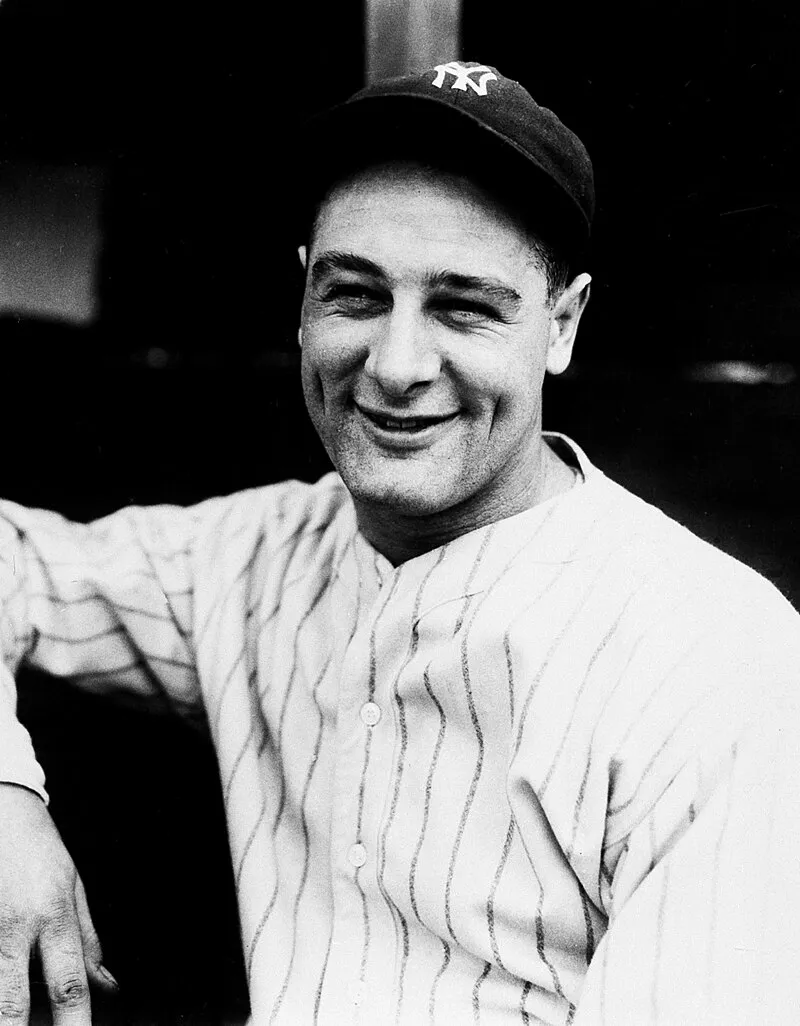
Photo of Lou Gehrig, via Wikimedia Commons
Lou Gehrig never earned more than $39,000 in a single season. He played in an era when ballplayers had no union, no free agency, and no leverage against owners who held virtually unlimited contractual authority over their careers. By the standards of his time, he was well compensated. By the standards of 2026, his entire career earnings — estimated at roughly $361,000 in total salary over 17 major league seasons — would not cover two weeks of a league-minimum contract.
And yet, in 2026, the economic value of Lou Gehrig's name, image, and legacy is estimated to generate millions of dollars annually through licensing, estate royalties, institutional partnerships, and the enduring commercial infrastructure built around one of the most recognizable figures in American sports history. Understanding how that transformation occurred is one of the more instructive financial stories baseball has to offer.
The Playing Career: Exceptional Performance, Depression-Era Wages
Henry Louis Gehrig was born on June 19, 1903, in the Yorkville neighborhood of Manhattan, the son of German immigrant parents. His path to Columbia University and then to the New York Yankees was shaped by athletic talent that was evident from an early age, though his early professional earnings reflected none of the commercial value he would eventually represent.
Gehrig signed with the Yankees in 1923 and established himself as the team's starting first baseman by 1925 — the same year his legendary consecutive games streak began. His salary grew steadily through the late 1920s and peaked at $39,000 per season in the early 1930s, a figure that placed him among the highest-paid players in the sport but that seems almost incomprehensible in the context of contemporary contracts.
For context: Gehrig's career total salary of approximately $361,000, adjusted for inflation, translates to roughly $7 to $8 million in 2026 dollars — less than what many current MLB players earn in a single month. The structural economics of baseball in the pre-war era effectively transferred enormous value from players to owners, a dynamic that the players' union would spend decades correcting beginning in the 1970s.
What Gehrig produced on the field, however, was beyond any era's capacity to adequately compensate. His career statistics — a .340 batting average, 493 home runs, 1,995 RBI, and the 2,130 consecutive games played streak that stood for 56 years — constitute one of the most complete bodies of work in the sport's history.
Endorsements in the Pre-Television Age
Gehrig's endorsement activity was necessarily constrained by the media landscape of his era, yet he was among the more commercially active players of his generation. His partnerships included relationships with Wheaties, the General Mills cereal brand that became synonymous with American athletic achievement during the 1930s, and with various sporting goods manufacturers who recognized the marketing value of his clean-cut, hardworking image.
He also appeared in print advertising for Huskies cereal and participated in radio endorsements that were the dominant commercial media format of the period. One particularly well-documented endorsement involved a testimonial for a laxative product — a reminder that the commercial landscape of the 1930s operated under rather different standards of brand alignment than contemporary athlete marketing.
Gehrig's endorsement income during his playing career is estimated at $10,000 to $20,000 annually in peak years, a meaningful supplement to his playing salary but a figure that illustrates how dramatically the commercial ecosystem surrounding athletes has expanded in the intervening decades.
The Broadcasting Career and Post-Playing Plans
Gehrig's forced retirement in 1939, following his diagnosis with amyotrophic lateral sclerosis — the degenerative neurological disease that would come to bear his name — cut short what might have been a substantial post-playing career in broadcasting or management. He had demonstrated an aptitude for communication and was well-regarded as a thoughtful, articulate public figure.
Before his condition rendered continued work impossible, Gehrig accepted a position with the New York City Parole Commission, appointed by Mayor Fiorello La Guardia, which paid approximately $5,700 annually. It was a role that reflected his genuine commitment to public service rather than financial optimization, and it occupied him during the final months before his health declined irreversibly.
He passed away on June 2, 1941, at the age of 37, less than two years after delivering his famous farewell address at Yankee Stadium — a speech in which he described himself as "the luckiest man on the face of the Earth" despite a terminal diagnosis. That address, delivered on July 4, 1939, would become one of the most quoted and reproduced pieces of sports oratory in American history, with commercial implications that Gehrig himself could never have anticipated.
The ALS Connection: How a Disease Became a Legacy Institution
The association of Gehrig's name with ALS — formally designated amyotrophic lateral sclerosis, colloquially known as "Lou Gehrig's Disease" throughout the United States — created a legacy institution that has generated both humanitarian impact and sustained name recognition across multiple generations. The ALS Association, while not directly managed by the Gehrig estate, has maintained Gehrig's image as central to its fundraising and awareness campaigns for decades.
The Ice Bucket Challenge of 2014, which raised over $115 million for ALS research in a matter of weeks, brought Gehrig's name to an entirely new generation of Americans who may have had limited prior awareness of his baseball achievements. Every mention of ALS in mainstream media is, in effect, a mention of Lou Gehrig — a form of perpetual brand exposure that no marketing budget could replicate.
This association has had tangible commercial implications for the Gehrig estate. Licensing requests connected to ALS awareness campaigns, documentary productions, and educational content regularly invoke Gehrig's name and image, generating royalty streams that have persisted and grown over time.
Licensing, Memorabilia, and the Hall of Fame Premium
Gehrig was inducted into the Baseball Hall of Fame in 1939 — in a special election that waived the standard waiting period given the circumstances of his illness — becoming one of the institution's earliest and most iconic members. Hall of Fame status confers ongoing licensing value through the Hall's official merchandise programs, with estate royalties flowing from jersey sales, replica memorabilia, and the institutional use of his name and likeness.
Authenticated Gehrig memorabilia commands extraordinary prices at auction. A Gehrig game-used jersey sold for over $1 million at a major sports auction in recent years, and signed items regularly achieve five and six-figure results. The scarcity of authentic Gehrig material — given the era in which he played and the relatively limited volume of authenticated items that survived — creates a supply constraint that sustains premium pricing indefinitely.
Documentary and archival licensing has also become an increasingly significant revenue source. The 1942 biographical film The Pride of the Yankees, starring Gary Cooper as Gehrig, remains one of the most celebrated sports films in Hollywood history and continues to generate licensing income when broadcast or streamed. Contemporary documentary productions exploring Gehrig's life and the history of ALS regularly license his image and archival footage, with fees accruing to his estate.
The 2026 Legacy Valuation
Nearly 85 years after his death, Lou Gehrig's financial legacy in 2026 is best understood as a perpetual royalty stream rather than a static asset. The combination of Hall of Fame licensing, memorabilia market activity, ALS awareness associations, documentary and archival licensing, and the sustained cultural presence of his farewell address speech creates an annual revenue profile that, while difficult to quantify precisely, is estimated to generate several million dollars per year across all channels.
The estate, managed through his family's succession, has been generally conservative in its licensing approach — prioritizing quality and dignity of association over volume, a strategy that has preserved the premium attached to the Gehrig name rather than diluting it through overexposure.
For a man who earned $39,000 in his best season, Lou Gehrig's financial story is ultimately about the extraordinary persistence of authentic greatness. The Iron Horse played through pain, performed with consistency that bordered on the superhuman, and faced death with a grace that transformed a farewell into an enduring American statement. In 2026, the market continues to price that legacy accordingly — and shows no signs of discounting it anytime soon.